


📌 Introduction
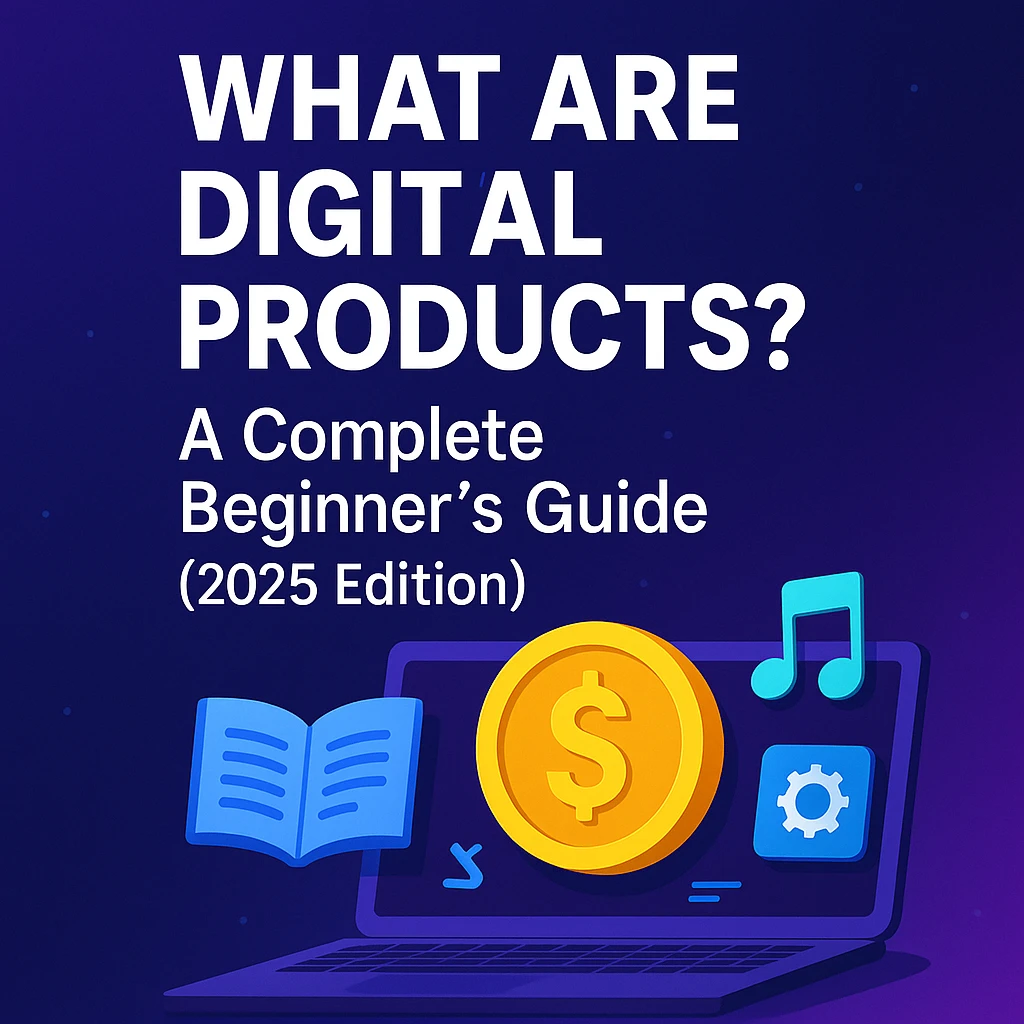
In today’s digital-first world, businesses are rapidly shifting from physical goods to digital products. Unlike traditional items that need warehouses, packaging, and delivery, digital products are intangible assets — files, software, or services — that can be created once and sold infinitely.
From eBooks and online courses to software, stock photos, and templates, digital products have transformed the way creators, entrepreneurs, and companies generate revenue. With minimal overhead costs, high scalability, and global reach, digital products are one of the fastest-growing industries in 2025.
This guide will give you a comprehensive overview of what digital products are, how they work, their advantages, popular examples, and why they’re shaping the future of online business.
📖 What Exactly Are Digital Products?
A digital product is any item that exists in a digital format and is distributed online. Unlike physical products, digital products don’t require raw materials, inventory, or shipping.
👉 In simple terms:
- A physical book = takes paper, printing, and delivery.
- A digital eBook = just a file (PDF/EPUB) you can download instantly.
Common Forms of Digital Products Include:
- Ebooks & online guides
- Courses & video tutorials
- Software, apps, plugins
- Music, graphics, stock photos
- Templates, presets, and design assets
- Subscriptions & memberships
🆚 Digital vs Physical Products: A Clear Comparison
| FactorPhysical Products 🛒Digital Products 💻 | ||
| Production Cost | Requires raw materials & factories | One-time creation cost |
| Storage | Needs warehouses or inventory | Stored on servers or cloud |
| Delivery | Shipping & logistics involved | Instant download or online access |
| Scalability | Limited by stock | Infinite scalability |
| Profit Margin | 10–30% average | 70–95% possible |
| Maintenance | Restocking required | Simple updates |
This simple difference is why digital products are often called “the business of the future.”
🌍 Why Digital Products Are the Future of Business in 2025
- High Demand: Online learning, SaaS tools, and digital assets are booming.
- Cost Efficiency: Once created, no recurring production costs.
- Global Reach: A single digital product can be sold to anyone worldwide.
- Automation Ready: Delivery and customer management can be automated.
- Passive Income: Products generate revenue long after creation.
💡 Fact: According to Statista, the global e-learning market alone is expected to surpass $400 billion by 2026.
💡 Examples of Digital Products
1. E-books and Online Guides
- Formats: PDF, EPUB, Kindle
- Popular platforms: Amazon Kindle, Gumroad, Payhip
- Example: “The 4-Hour Work Week” ebook model
2. Online Courses & Tutorials
- Platforms: Udemy, Coursera, Skillshare
- Formats: Video lessons, worksheets, quizzes
- Huge opportunity for creators in 2025
3. Software & SaaS Tools
- Examples: Canva, Notion, Grammarly
- Subscription model ensures recurring income
4. Design Templates & Assets
- Resume templates, website themes, graphics packs
- Sold on marketplaces like Envato, Creative Market
5. Music, Photos & Videos
- Royalty-free music
- Stock photography sites (Shutterstock, Pexels)
- Video LUTs, editing presets
6. Memberships & Subscriptions
- Newsletters, Patreon communities, Discord groups
- Recurring monthly income model
✅ Benefits of Selling Digital Products
- Zero Inventory Hassles: No warehouses, no delivery issues.
- Lower Risk: Once created, products can sell endlessly.
- High Profit Margins: Keep up to 90% profit per sale.
- Passive Income Streams: Automated delivery & sales funnels.
- Eco-Friendly: No packaging, no carbon footprint from shipping.
⚠️ Challenges of Digital Products
While digital products are powerful, they also come with challenges:
- Piracy & Copying – Easy to duplicate without copyright protection.
- Market Saturation – Certain niches (like eBooks) are overcrowded.
- Trust Issues – Customers often hesitate before buying non-physical items.
- Constant Updates – Products like software need regular improvements.
💡 Solution: Build a strong brand, provide quality, and keep innovating.
🔮 Conclusion (Part 1)
Digital products are not just a trend — they are the future of entrepreneurship. From individual creators to billion-dollar companies, everyone is embracing them because they’re scalable, profitable, and accessible worldwide.
If you’re just starting out, digital products give you the freedom to launch a business with minimal cost and maximum potential.
👉 In the next parts of this blog, we’ll cover:
- Step-by-step guide to creating digital products
- Marketing strategies to sell them effectively
- Future trends in the digital product economy